The bee-house system works best when it is planned as a visible garden loop, not hidden utility furniture. This guide starts with the house and nearby flowers, then follows Golden Honey into cooking and decoration. Read it when you first encounter Busy Bees’ Houses or when you want to move one into the Valley without separating the flowers, pollination, and honey collection that make the feature work. A flower border, a reachable path, and a nearby cooking or decorating purpose make the routine easier to sustain.
Understand the Busy Bees’ House loop
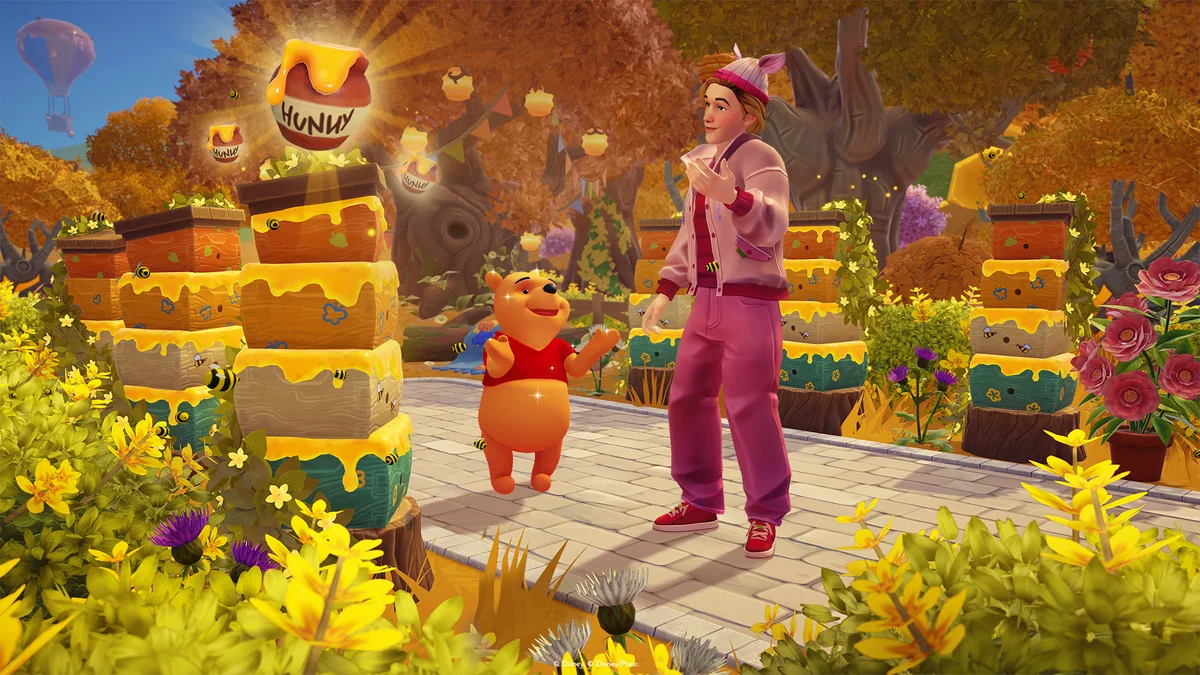
A Busy Bees’ House is the center of Honeyglow Woods beekeeping. Place flowers around the house so the bees can pollinate them and generate more honey in the house. The result is Golden Honey, a new resource used for the themed cooking, furniture, and decoration content. The important relationship is not a hidden menu statistic; it is a visible placement loop. A house, its surrounding flowers, and the honey it produces belong together, which makes the feature naturally fit a decorated corner instead of a remote storage row.
Restoring Busy Bees’ Houses is part of the Adventure Pack’s cozy discovery rhythm. Once you encounter the system, build a clear visual relationship between the house and its flowers. A tight flower patch makes the function legible when you return later, particularly if you place houses in a busy decorated biome. Avoid treating Golden Honey as a generic drop that appears everywhere. The launch materials position it as the product of bee houses and pollinated flowers, so build around that published loop rather than around unsupported efficiency claims.
Use flowers as the working part of the setup
Flowers are not only scenery in this system. When they sit around a Busy Bees’ House, the bees pollinate them and support honey generation. The showcase also describes a fully pollinated house as doubling flower growth in the same biome up to its spawn limit; the launch patch notes phrase the benefit as faster growth for nearby flowers. Both descriptions point to the same practical decision: keep the flower area around a house visible and intentional instead of scattering every flower far away from it.
This design has a useful decorating consequence. A flower border can function as an attractive garden edge while also communicating what the bee house is doing. Put the house where you would be happy to see a honey-and-flower scene on repeated travel routes. If a biome already has a strong theme, choose a patch that supports the scene rather than covering a path or an interaction point. The published information does not assign universal best flowers, timing tables, or guaranteed yield counts, so the honest first priority is a clean, usable pollination layout.
Spend Golden Honey on the new theme
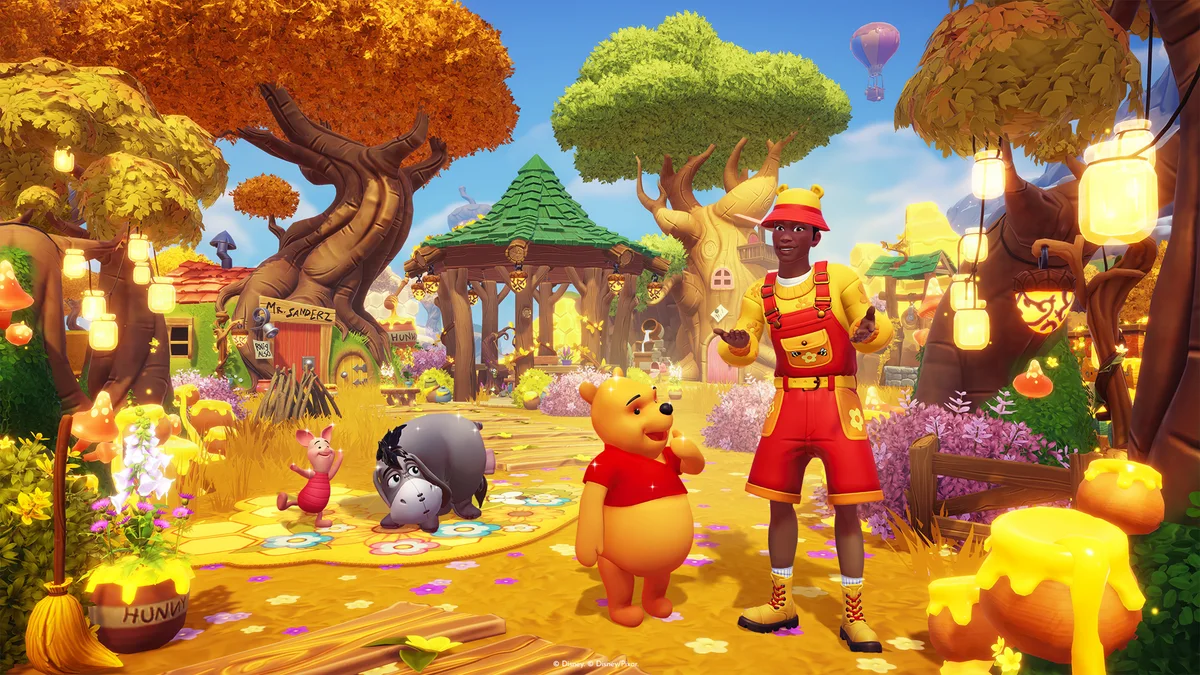
Golden Honey feeds the Honeyglow Woods crafting identity. The launch notes name honey-based recipes and furniture including Warm Milk & Honey, Honeycrunch Bar, Pooh’s Birthday Cake, the Honeypot Lamp, and the Cozy Honeyleaf Rug. Those examples explain why beekeeping belongs in both a cooking and decorating routine: the output is not a one-purpose quest token. It supports food, furnishings, and the golden woodland atmosphere that the Adventure Pack brings back to the Valley.
When you collect Golden Honey, decide whether your immediate goal is kitchen content or a decorating project. The named furniture pieces are especially useful for anchoring a honey-themed area around a bee house, while the named dishes give the resource a place in the cooking loop. Keep your first Golden Honey uses purposeful so you can see what each new recipe or furnishing adds. The site will only add exact ingredient totals and full recipe records after they can be checked against a reliable in-game or first-party source.
Move houses beyond the Woods when your layout needs it
Busy Bees’ Houses are not locked to Honeyglow Woods. The launch materials say that they can be moved to any other biome, including the base-game Valley. That makes them an unusually flexible DLC structure: the story introduces them in the Woods, but their design value can travel with a themed garden, a cottage corner, or a flower-heavy biome in the main Valley. You can keep the first house in its original context and use later placement decisions to connect the new mechanic to older builds.
Moving a house should preserve the whole loop, not only the object. Pick a location where there is room for flowers, where the house does not block a frequently used path, and where returning to collect honey fits your route. A bee house placed beside a cooking area creates an obvious connection to Golden Honey recipes; one placed near a natural woodland scene emphasizes the furniture and flower side. The system rewards a layout that feels like a maintained garden rather than a collection of unrelated utility objects.
Build a repeatable honey routine
A simple routine is enough: visit the house, check the flower setting around it, collect Golden Honey when it is ready, and choose whether the next use is a recipe or a furnishing. The pack also adds special portals to Scrooge McDuck’s Store and Chez Remy’s restaurant inside the Woods, so the new resource sits near the two places players naturally connect with furniture and food. That is a better reason to revisit the Woods than an artificial daily checklist: its systems link directly to familiar Valley activities.
Keep the routine legible as the pack grows. If a future update changes a recipe or adds more bee-house options, a clear layout makes the change easy to absorb. The foundation remains the same: flowers around a Busy Bees’ House, pollination, Golden Honey, and themed crafting. The strongest early builds let a player understand that loop from the scene itself. A visitor should see flowers, bees, and honey-based decor and immediately know why that corner of the Valley exists.
Quick answers
Frequently asked questions
What creates Golden Honey?
Golden Honey comes from the beekeeping loop introduced with Honeyglow Woods. Place flowers around a Busy Bees’ House so the bees can pollinate them and generate more honey in the house. The official launch materials describe Golden Honey as the resource used for the new themed recipes, furniture, and decorations.
Can Busy Bees’ Houses leave Honeyglow Woods?
Yes. The July 8 launch notes say that a Busy Bees’ House can be moved to any other biome, including the base-game Valley. Keep enough space around the new location for its flowers, because the house and its flower setting are part of the same beekeeping loop.
Which honey items are named at launch?
Gameloft names Warm Milk & Honey, Honeycrunch Bar, Pooh’s Birthday Cake, the Honeypot Lamp, and the Cozy Honeyleaf Rug as examples. They show that Golden Honey crosses cooking and decoration, rather than serving only as a one-time story material for the new Woods theme.